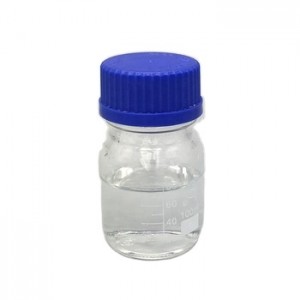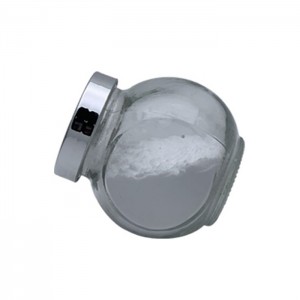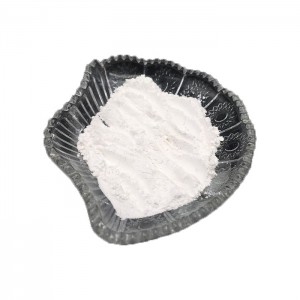


Food Additives 99%min CAS 147-71-7 D-(-)-Tartaric Acid
Product Description
D-Tartaric acid, also known as (S, S)-tartrate or D-threaric acid, belongs to the class of organic compounds known as sugar acids and derivatives. Sugar acids and derivatives are compounds containing a saccharide unit which bears a carboxylic acid group. D-Tartaric acid has been detected but not quantified in loquats (Eriobotrya japonica). This could make D-tartaric acid a potential biomarker for consuming these foods. D-Tartaric acid is a secondary metabolite. Secondary metabolites are metabolically or physiologically non-essential metabolites that may serve as defense or signalling molecules. In some cases, they are molecules that arise from the incomplete metabolism of other secondary metabolites.
Tartaric acid is generally produced from crude tartar and lees, which are byproducts of wine production. However, there are a few reports of fermentative production of tartaric acid by Gluconobacter suboxydans growing on Glucose or sorbitol. Vanadate plays a central role in this process. The microorganism forms 5-keto-D-gluconic acid, which is oxidized to tartaric acid. The vanadium catalyzes this reaction. Product concentrations up to 2.96 g. L-1 have been observed after 3 days of fermentation.
Product Properties
D-(-)-Tartaric acid is a polycrystalline solid, widely used as food additive. It has been reported to exhibit piezoelectric effect.
There are three stereoisomers of tartaric acid: dextrose tartaric acid, levophyllic acid and meso tartaric acid. The optical rotation of the mixture of the same amount of dextrorotatory and levorotism is mutually offset, known as racemic tartaric acid. The mesomer does not exist in nature and can be synthesized chemically. Various tartaric acids are colorless crystals that are easily soluble in water.
D-Tartaric acid is a white crystalline dicarboxylic acid found in many plants, particularly tamarinds and grapes. It is an acidulant that occurs naturally in grapes. It is hygroscopic and rapidly soluble, with a solubility of 150 g in 100 ml of distilled water at 25°c. It has a slightly tarter taste than citric acid, with a tartness equivalent of 0.8–0.9. It augments the flavor of fruits in which it is a natural constituent. It is used in grapeand limeflavored beverages and grape-flavored jellies. It is used as an acidulant in baking powder and as a synergist with antioxidants to prevent rancidity.
Application
D-(-)-tartaric acid is widely used as an acidifier in beverages and food, similar to citric acid. It can also be used as a mordant for acid dye when combined with tannin. In the photographic industry, tartaric acid is used for some development and fixing processes. Its iron salts are photosensitive, making them suitable for blueprint production. Tartaric acid has the ability to form complexes with various metal ions, making it effective as a cleaning and polishing agent for metal surfaces. Potassium tartrate, known as Rochelle salt, is used to prepare Fehling reagent and is also employed as a laxative and diuretic in medicine. It is used as an intermediate for the synthesis of quinophan. Due to its piezoelectric properties, tartaric acid crystals find application in the electronics industry.
D-(-)-Tartaric acid is commonly used as a resolving agent in organic synthesis. It is the synthetic enantiomer of L-(+)-Tartaric acid and is utilized in the production of synthetic analgesics. Tartaric acid is the second largest alpha hydroxy acid (AHA) in terms of size, with glycolic acid being the smallest and citric acid being the largest. It serves as a precursor for the synthesis of ester derivatives such as D-tartaric acid diethyl ester, D-tartaric acid dimethyl ester, and D-tartaric acid diiso-propyl ester. Moreover, it is employed in the creation of chiral aziridine derivative, which is a common intermediate for manufacturing hydroxyethylamine class HIV protease inhibitors like saquinavir, amprenavir, and nelfinavir. In the food industry, it is extensively used as a beer foaming agent, for regulating food acidity, and as a flavoring agent. However, due to its challenging workability and potential skin irritation, it is not frequently utilized in cosmetic or anti-aging preparations.

Specification
|
Content |
≧99.5% |
|
Specific rotation |
-12 — 12.8 |
|
Drying loss |
≦0.3% |
|
Sulfate |
≦0.05% |
|
Heavy metal (as Pb) |
≦0.001% |
|
Ignition residue |
≦0.1% |
|
Optical purity |
≧99.7% |
Recommend Products
L-Tartaric acid
CAS No. :87-69-4
EINECS No.:201-766-0
Molecular weight: 150.08
HS Code: 2918120000
Molecular Formula: C4H6O6
DL-Tartaric acid
CAS No. :133-37-9
EINECS No.:201-766-0
Molecular weight: 150.09
HS Code: 2918120000
Molecular Formula: C4H6O6